



RadMag, developed by the Space Research Department, Centre for Energy Research (EK), is an instrument suite for space radiation and magnetic field measurements to study space weather. RadMag might be a key instrument to the Distributed Space weather Sensor System (D3S) of the European Space Agency (ESA) or utilized as hosted payload on navigation, communication or Earth observation satellites).
On August 17, 2021, at 03:47 CEST, the European Vega launcher successfully launched the VV19 mission, with the first version of RadMag on board. The hosting satellite platform is a three-unit (3U, approx. 30 x 10 x 10 cm3) CubeSat, developed by C3S LLC, Budapest, Hungary. RADCUBE is a technology demonstration mission of the RadMag instrument, i.e. to prove the suitability of the technology used in space.
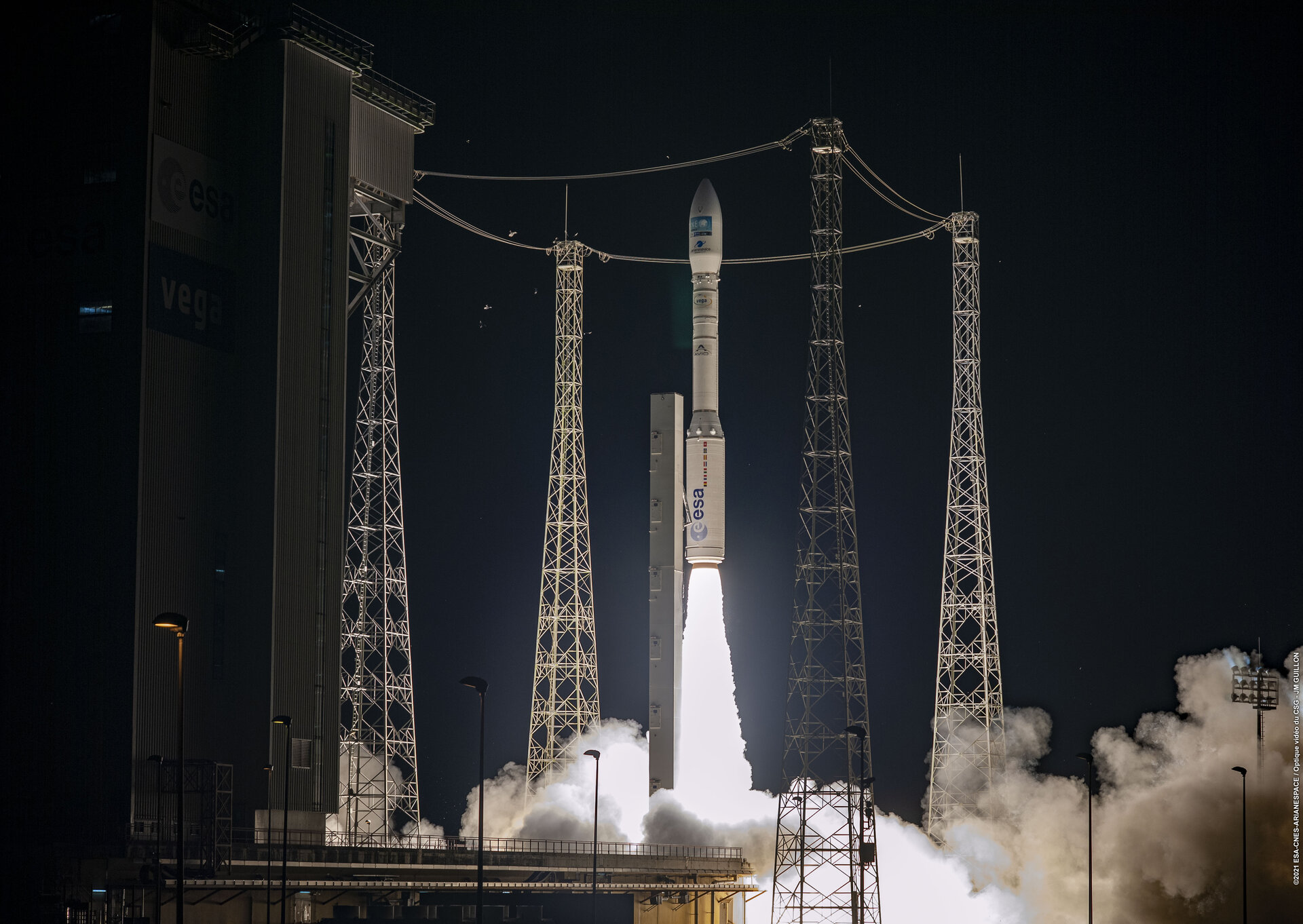
Vega liftoff with RADCUBE/RadMag on board the VV19 mission (Credits: Jim Guillon / ESA-CNES-ARIANESPACE)
The RADCUBE programme is implemented under ESA's General Support Technology Programme (GSTP contracts 4000117620/16/NL/LF/as and 4000120860/17/GLC/as). The magnetometer for RadMag was developed by Imperial College London, and the magnetometer’s boom opening mechanism by Polish space industry company Astronika. RadMag also includes two printed circuit boards from ESA for studying radiation hardness. The RadMag instrument was developed and tested by EK in collaboration with REMRED Ltd., a space industry company founded by the research centre. The development of the D3S-RadMag is also carried out by EK in close collaboration with REMRED Ltd. under contract ESA 4000124572/18/NL/CBi.
For more information contact the offical webpage of the Centre for Energy Research.
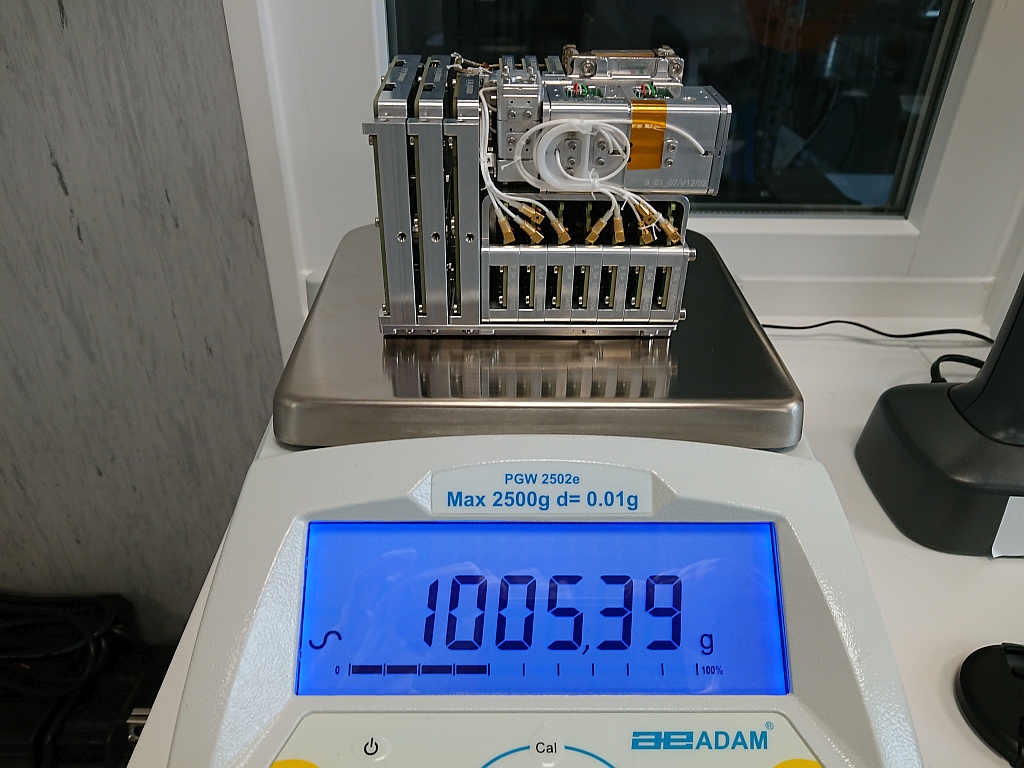
Protoflight model of the RadMag instrument before integration to the RADCUBE satellite (Credits: EK)
Attila Hirn