




The ESEO - Ladybird Guide to Spacecraft Operations Training Course is an ESA Academy training course for university students where we had the chance to learn about the fatal challenges of operating spacecraft and also practice it in „real life” with planning and simulating a mission. The course was taking place at ESA Academy's Training and Learning Centre at the European space Security and Education Centre (ESEC) in Redu, Belgium. The centre is in a beautiful valley surrounded with forests and fields.
We spent our days between 15-18 May, in the Training and Learning Centre, where a senior Mission Operations Concept Engineer introduced us to the secrets of his profession.
We learned about sensors, actuators, power systems, thermal systems, orbit control, telemetry, software, data handling, without excessive mathematics or technical jargon. Beside these, it was a great emphasis on what could go wrong, and how we should handle these situations both professionally and psychologically right – as the deadlines and stress can lead good engineers to make bad decisions.
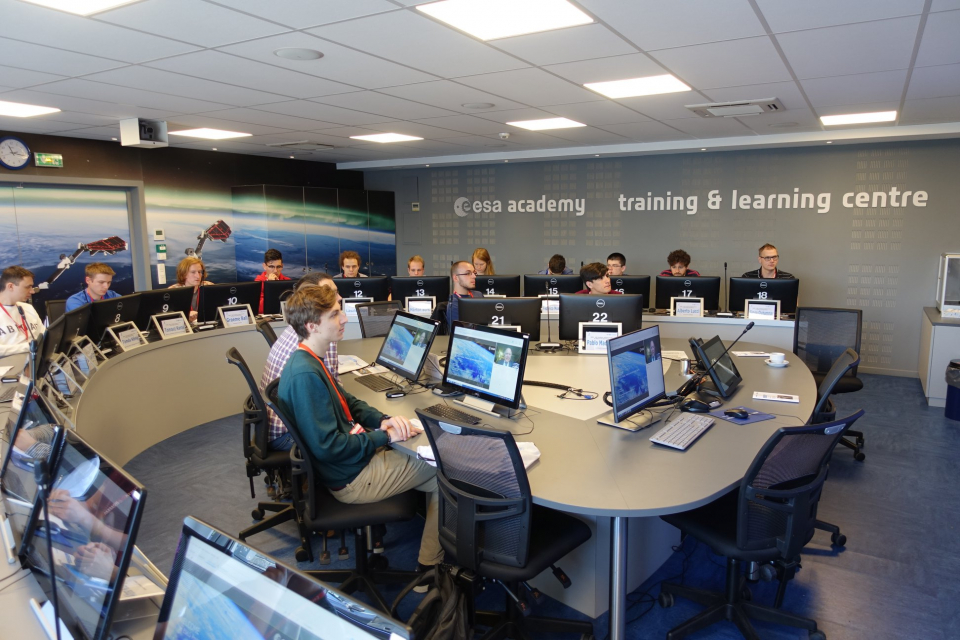
Students attending welcome introduction (Credits: ESA)
We also learned about the dramatic events of former missions, and drew many lessons from them: we had to figure out the mechanical and human errors just from the timelines, and work out the solutions: what should we are supposed to do not to lose the spacecraft for good?
We also had the chance to visit antennas (the biggest one has a diameter of 20 m!), and the PROBA Operation Room, just in time to be present for a satellite passage, so we could watch the realtime data collection. We took a look at the E-Robotic lab too, where primary and secondary teachers are taught how to bring space into their classroom using Robotics. They learn how to build LEGO robots, operate them and make some scientific measurements.
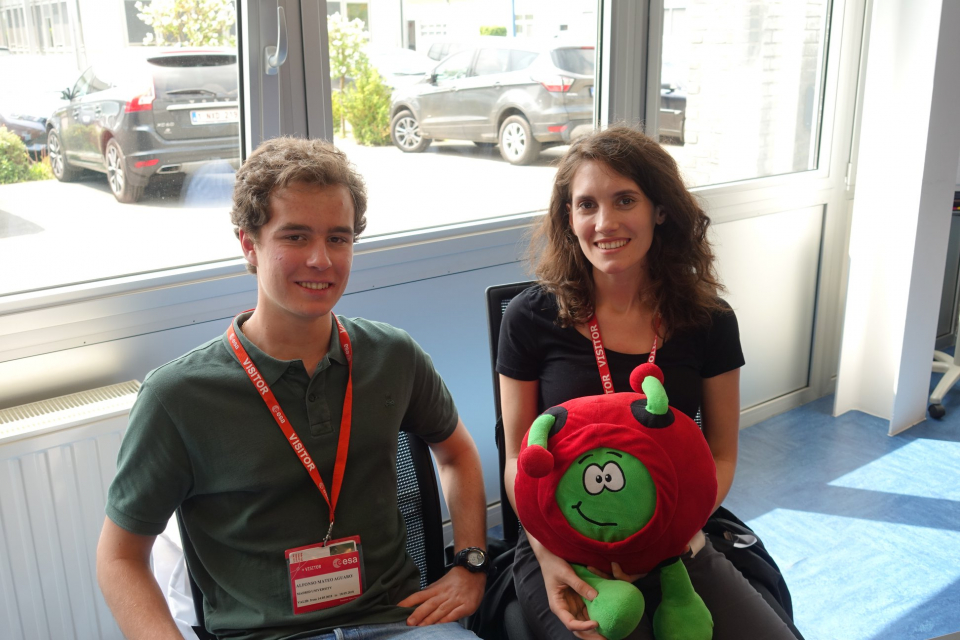
ESEO-TRITEL student participant Anna Baranyai with Paxi in her hands (credits: ESA)
We also had to plan a deep space mission, called Snow White. Our objective was to collect as many scientific data from dwarf planets as we could, and practice the right operating habits, orbit control, communication, and data handling during it.
The highlight of the week was the simulation with the spacecraft we designed for the mission. We had 45 minutes to work as a team and figure out the problems that occurred during the mission, and solve them the right way. So we were a real, order-giving operation team for a short time.
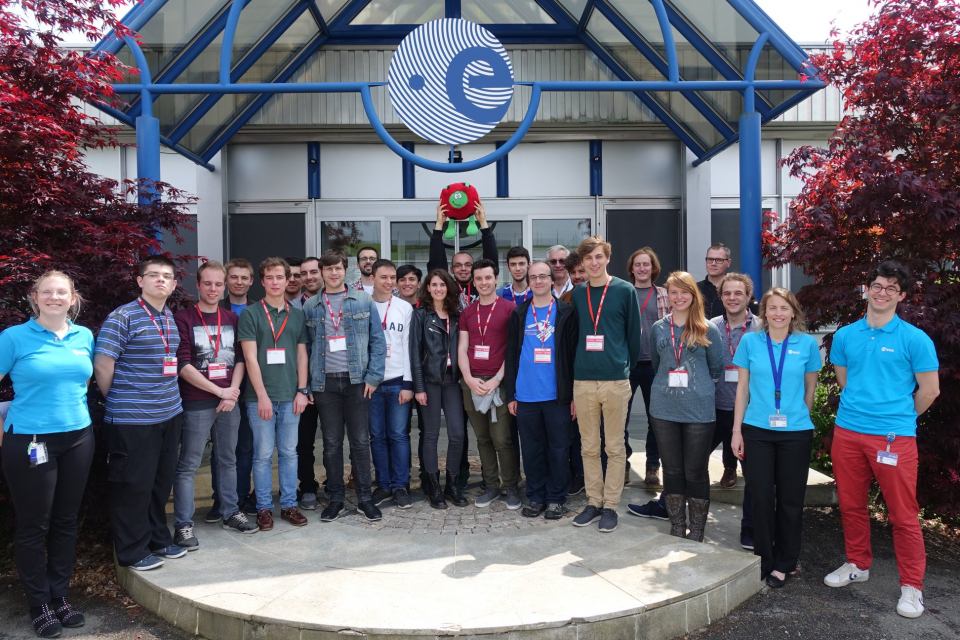
Group photo of the participants (credits: ESA)
But the story doesn’t end here, the call for applications for the next edition of the Ladybird Guide to Spacecraft Operations training course in September 2018 is already open!
Anna Baranyai